Over the past few weeks,
communicable disease surveillance teams and public health professionals have been on alert due to the increasing number of isolated measles cases in Central Canada.
As of today, 4 cases of measles in Alberta and 10 cases in Saskatchewan been
have been confirmed since the start of 2014.1,2
Now, 4 and 10 cases seem like a very small number compared
to hundreds of cases of sexually transmitted infections and influenza; why do
we make such a big deal when the cases are measles related? In order to
understand the situation, we must look at the background and epidemiology of
the disease.
Background of Measles
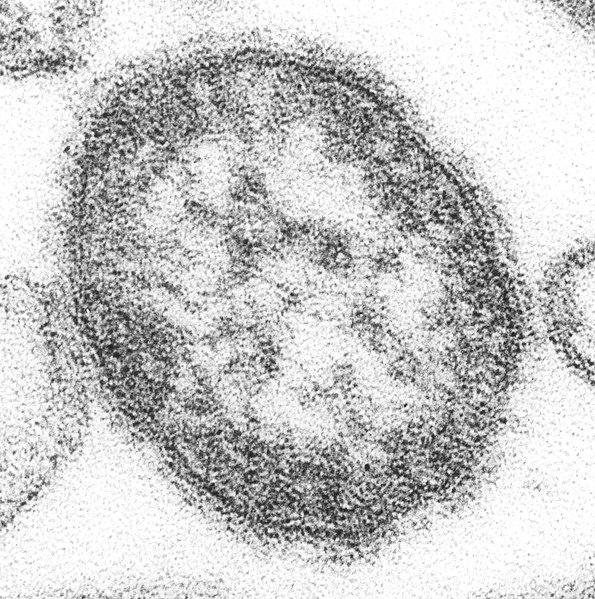 Measles is a highly contagious infectious
disease caused by the virus Morbillivirus
of the Paramyxoviridae family. The
culprit is a spherical, non-segmented, negative sense RNA virus that zoonotic
in origin.3 It is believed that cross-species transmission of the
virus may have occurred approximately 10, 000 years ago. The first documented case of measles dates
back to ~900CE, where Muhammad ibn Zakariya ar-Razi, a Persian philosopher and
physician, published a book that attempted to distinguish measles from
smallpox.4 In 1757, a Scottish physician named Francis Home
discovered that measles arose from an infectious agent by transmitting measles
to healthy individuals. He inoculated the blood of infected patients to the
skin of health people and transferred the virus to 10 out of 12 health
individuals. Finally, in 1954, the virus was isolated by Dr. Thomas Peebles In
Boston, USA.5
Measles is a highly contagious infectious
disease caused by the virus Morbillivirus
of the Paramyxoviridae family. The
culprit is a spherical, non-segmented, negative sense RNA virus that zoonotic
in origin.3 It is believed that cross-species transmission of the
virus may have occurred approximately 10, 000 years ago. The first documented case of measles dates
back to ~900CE, where Muhammad ibn Zakariya ar-Razi, a Persian philosopher and
physician, published a book that attempted to distinguish measles from
smallpox.4 In 1757, a Scottish physician named Francis Home
discovered that measles arose from an infectious agent by transmitting measles
to healthy individuals. He inoculated the blood of infected patients to the
skin of health people and transferred the virus to 10 out of 12 health
individuals. Finally, in 1954, the virus was isolated by Dr. Thomas Peebles In
Boston, USA.5

There is no specific treatment for measles. Treatment
often involves Tylenol, bed rest, humidified air and vitamin A supplements in
some children.6 Most people recover and develop long-term immunity
against the virus. 3However, those that do die of measles are often
vulnerable people such as children and immunocompromised individuals. In
developed countries, less than 1 in 1000 children die of measles, however in
endemic areas of developing regions the case-fatality rate is an astounding
5-10%.3
Epidemiology and
Public Health
Measles is one of the most highly contagious infectious
diseases and can only be maintained if a continuous supply of susceptible
persons exists.3 Measles is most prevalent in endemic regions and
outbreaks typically occur in the late winter and early spring due to greater
congregation of people.3 Rate of contact with infected people,
amount of protective maternal antibody and vaccination status are the factors
that determine the average age at which measles contraction occurs. In
urbanized and densely populated regions with low vaccination coverage, infants
and children and most susceptible to the disease. As the population density
decrease and vaccination coverage rates increase, the age group most burdened
by measles continues to increase.3
According
to the World Health Organization, measles is still the leading cause of death
amongst vaccine-preventable diseases in children.7 In 2010, measles
related mortality have been reduced from 535, 300 to 139, 000, a matter of 74%
in 10 years.3 In the WHO region of Americas, endemic measles haves
been completely eradicated as of 2002 and there has been no indigenous case of
measles in Canada since 1997.8 Imported cases of measles still occur
and therefore, public health professionals are conscientious of the current
measles outbreak in the Philippines that is slowly emanating into Canada.9
 Measles is vaccine-preventable. The first live
attenuated vaccine was licensed in the United States in 1963 and a more
attenuated version was developed in 1968.5 The measles virus is antigenically
monotypic, meaning that the surface proteins that induce the host’s immune
system have retained its structure through time.3 This is great news
for public health because this feature indicates that vaccines developed in the
past still remains protective worldwide. In Canada, measles vaccine (MMR) is
combined with other attenuated virus such as mumps and rubella and the first
dose of vaccination is recommended at 12 months of age, once newborns lost
their passively acquired maternal antibody against the virus.10 Two
doses of vaccine are recommended to ensure complete protection.
Measles is vaccine-preventable. The first live
attenuated vaccine was licensed in the United States in 1963 and a more
attenuated version was developed in 1968.5 The measles virus is antigenically
monotypic, meaning that the surface proteins that induce the host’s immune
system have retained its structure through time.3 This is great news
for public health because this feature indicates that vaccines developed in the
past still remains protective worldwide. In Canada, measles vaccine (MMR) is
combined with other attenuated virus such as mumps and rubella and the first
dose of vaccination is recommended at 12 months of age, once newborns lost
their passively acquired maternal antibody against the virus.10 Two
doses of vaccine are recommended to ensure complete protection.
What can we do?
Reference:
- http://regina.ctvnews.ca/regina-health-region-expands-list-of-places-where-measles-may-have-spread-1.1673982
- http://www.calgaryherald.com/news/calgary/case+measles+reported+Calgary/9482060/story.html
- http://accessmedicine.mhmedical.com.ezproxy.library.ubc.ca/content.aspx?bookid=331§ionid=40726951
- http://www.news-medical.net/health/Measles-History.aspx
- http://www.historyofvaccines.org/content/timelines/measles
- http://www.ncbi.nlm.nih.gov/pubmedhealth/PMH0002536/
- http://www.who.int/mediacentre/factsheets/fs286/en/index.html
- http://www.phac-aspc.gc.ca/im/vpd-mev/measles-rougeole-eng.php
- http://www.thestar.com/life/health_wellness/2014/02/10/measles_outbreak_in_philippines_slowly_spreading_to_canada.html
- http://www.phac-aspc.gc.ca/im/ptimprog-progimpt/table-1-eng.php
- Diaz-Ortega JL, Bennett JV, Castaneda D, Martinez D, de Castro JF. Aerosolized MMR vaccine: evaluating potential transmission components to vaccine administrators and contacts of vaccines. Biologicals. 40;4:278-281.
- http://www.cdc.gov/measles/
- http://immunize.cpha.ca/en/diseases-vaccines/measles.aspx
- http://www.immunize.org/catg.d/p4026.pdf
- http://www.health.alberta.ca/documents/Immunization-Strategy-07.pdf

Sakshi Kapoor - Great blog loaded with a lot of information !! Well researched.
ReplyDeleteQuestion - I was just curious to know whether there are any reactions to MMR vaccine? If yes what are they ?
Hi Sakshi, like all vaccines MMR can also have adverse effects. Mild effects include fever, mild rash around inoculation area, and swelling of glands. Moderate to severe effects occur extremely rarely but include seizures from fever, pain and joint stiffness, allergic reaction, and fever related side effects.
DeleteThis comment has been removed by the author.
ReplyDeleteRupinder Kaur Brar:Hello JungIn:It seems that you did good research on measles for this blog.Great work.
DeleteQuestion: As you mentioned that measles can be maintained only if susceptible population exists and as population density over an area decreases then vaccine coverage increases,the age burden of measles continues to increase.
I am unable to understand what do exactly susceptible population is referring to and how by increasing vaccine coverage over an area,the age burden of disease is still increasing?
Thank You.
Hi Jung-In,
ReplyDeleteI knew that death from measles was fairly rare in developed nations, but I was surprised to learn that case fatality was so high in developing nations. 5-10% would result in a huge number of deaths.
What do you think is the best manner of educating the public about the danger of measles? Simply citing the statistics seems to do a very poor job of convincing people, particularly those who have already been convinced that the vaccine is dangerous. This is an area that I am particularly interested in and it seems that anti-vaccine attitudes have only gotten worse over the past 16 years since the publication of the Wakefield paper, even though he has been discredited and stripped of his medical license and the paper was retracted.
- Spencer Gall